
Evergreen guide
Behind the RNG: how digital games pick outcomes
Slot spins and digital table results rely on random number generators (RNGs). UK-licensed operators must use tested software, but random does not mean evenly distributed luck for any single session.
What an RNG does
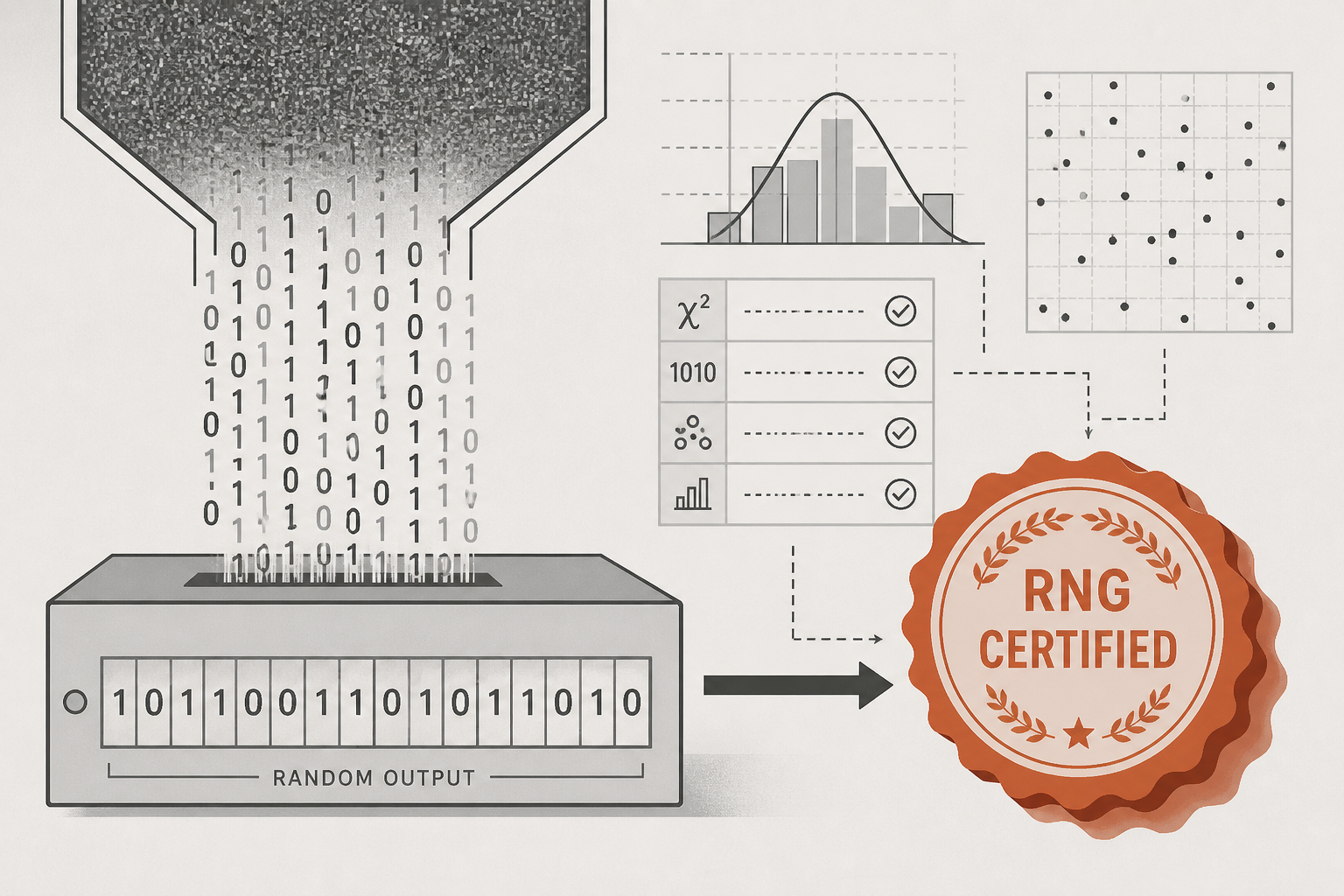
An RNG produces unpredictable number sequences that map to reel stops, card draws or wheel segments. Each approved game ships with a published return-to-player (RTP) figure and volatility profile tested against millions of simulated rounds.
Live dealer games differ: physical cards and wheels replace software RNG for those rounds, though supporting systems may still use randomisation for side features.
Testing labs and certification
Independent testing houses evaluate game maths and RNG behaviour before titles reach regulated markets. Names that appear frequently in industry documentation include eCOGRA, GLI (Gaming Laboratories International), iTech Labs and BMM Testlabs. A UKGC-licensed operator must ensure games meet commission standards on fairness and transparency.
- Lab reports verify RTP, hit frequency and rule implementation match submitted files.
- Operators and platform providers re-test when game versions change.
- Certification marks on an operator site refer to testing programmes, not a guarantee of personal winnings.
Licensing checks fairness at the system level. It does not remove house edge. Short-term results can swing far from the stated RTP.
What players can verify
Inside many slot info screens you can read RTP and rules. You can confirm an operator’s UK licence on the UKGC register. You cannot inspect the RNG directly; you rely on regulator oversight and lab testing instead.
The short version
Digital casino outcomes come from tested RNGs or, in live games, physical equipment. UKGC-licensed operators must use approved software audited by recognised labs. Certification proves the maths is implemented correctly; it does not predict your next spin. 18+ only.